
How a practical works here
Every simulator on the site has an Experiment mode. It opens with the aim, what you need and a real-lab safety note, then gives you a method checklist, a timer and a results table that fills as you measure. At the end you answer a conclusion question and download a PDF lab report. The simulators collected on this page are the ones built around lab apparatus.
Which practical, which simulator
| Practical | Open |
|---|---|
| Using a light microscope, magnification, cell size | Virtual Microscope |
| Osmosis in potato tissue, the naked egg | Osmosis Lab |
| Light intensity and the rate of photosynthesis | Photosynthesis Lab |
| Gram staining, growth curves, antibiotic discs | Virtual Bacteria Simulator |
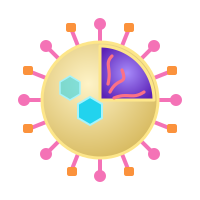
| Plaque assays and one-step growth | Virus Virtual Lab |
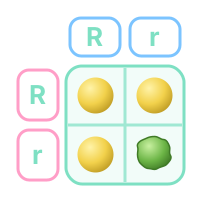
| Genetic crosses, Morgan's fruit flies, the corn-ear chi-square test | Interactive Punnett Square Calculator |
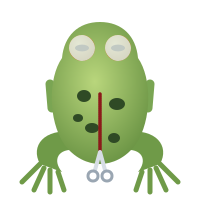
| Frog dissection: external features, the mouth, the organs in place | Virtual Frog Dissection |
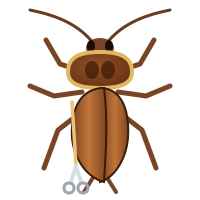
| Cockroach dissection: morphology, mouthparts, the organs from the dorsal side | Virtual Cockroach Dissection |
When a virtual lab helps
Before a real practical, it lets students rehearse the method and know what a good result looks like. After it, they can repeat the run with more data points or a variable the lab could not change. When the real lab is not possible, because of time, equipment, safety or distance, it gives every student the data and the analysis that the practical is there to teach. It is also the alternative many schools now offer to dissecting real animals: the Virtual Frog Dissection takes students through the pins, the incisions and the organs one step at a time. The body-system simulators carry practicals too: food tests and enzymes in the digestive system, spirometry in the lungs, the blind spot in the eye.
Updated